


Buying a custom saddle shouldn’t feel like a leap of faith. Joyseat turns “custom” into a clear, step-by-step process—from a quick at-home measurement to a pre-production preview, 3D-printed padding, and hand-assembly in Northern Bohemia. Here’s how your Joyseat is ordered, designed, manufactured, and supported—updated for how Posedla works today.
Custom, but predictable
Back in 2022, the Joyseat story was already simple: you share your data, we build your saddle. What’s changed since then is how much clearer and more flexible the journey has become.
Today, Joyseat is available in a full range—Plus, Pro, and Ultra—so you can choose your preferred shell and rail materials while keeping the same core idea: fully custom 3D-printed padding, built from your anatomy and riding inputs. And the process now includes a stronger “confidence layer” around the custom part: a pre-production preview, guided setup support, and long-term options like padding refresh and crash replacement.
Step 1: Choose your Joyseat model (Plus / Pro / Ultra)
Before you measure anything, you choose the platform that fits your bike, priorities, and budget:
-
Joyseat Plus: polymer shell + steel round rails (compatibility + durability focus)
-
Joyseat Pro: carbon shell + carbon rails (lightweight performance)
-
Joyseat Ultra: reinforced UD carbon shell + rails (maximum stiffness/durability for demanding rides)
No matter which model you pick, the “custom part” stays the same: your 3D-printed padding is tailored to your size, shape, and stiffness needs based on your inputs and imprint.

Step 2: Place your order (and your Smiling Butt Kit ships right away)
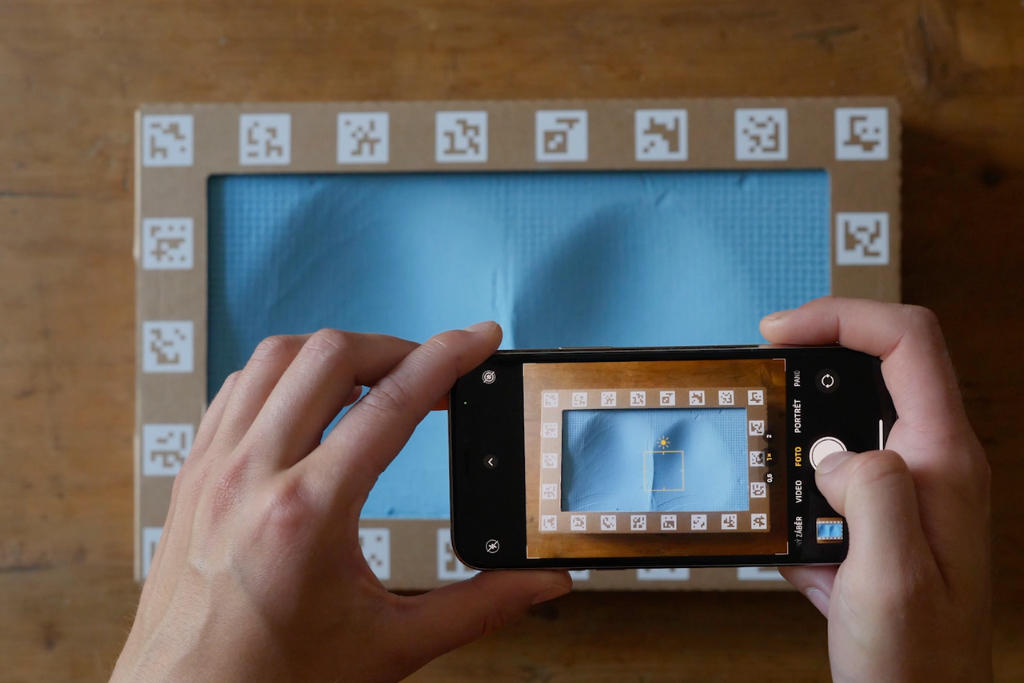
Once you purchase, the next step is physical: you’ll receive the Smiling Butt Kit, our at-home impression kit used to measure sit bone spacing and capture key shape cues.
This is the moment where custom becomes real—but it’s still quick. Your job is essentially:
-
Make an imprint (wear tight-fitting underwear)
-
Take the required photos from multiple angles
-
Upload the photos to the web configurator and answer a few questions about you and your riding
Step 3: Upload your riding inputs in the configurator
The configurator turns “I ride gravel and my butt is picky” into usable design inputs. You’ll share details like:
-
Bike type / discipline
-
Riding style (position) and typical ride length
-
Annual mileage
-
Flexibility (hamstrings and lower back)
-
Basic body inputs (so the saddle support can be tuned appropriately)
Think of it as telling us how you sit, not just what you ride.
Step 4: From imprint to model: the algorithm does the heavy lifting
Once your photos and answers are in, Posedla’s in-house system processes the imprint and calculates the distance between your sit bones with high precision, then generates a unique saddle model. In the older version of this article, this was already the “magic step.”
The updated difference is that it’s now wrapped in more transparency and control: you don’t have to blindly trust the process—you’ll get a clearer view of what’s being built for you before manufacturing starts.

Step 5: Preview before production (less guesswork, more confidence)
Custom is awesome—until the little “what if” voice shows up.
That’s why every Joyseat purchase now includes a pre-production preview of key specs and a visual confirmation of what’s about to be made. This step is designed to make custom feel predictable, not mysterious.

Step 6: 3D printing the padding (industrial MJF + TPU)
Your custom padding is produced using industrial Multi Jet Fusion (MJF) technology with TPU (thermoplastic polyurethane). This matters because it enables a consistent, precise structure—so support can be tuned in zones (softer where you want relief, firmer where you need support), instead of relying on one-piece foam behavior.
After printing, the padding goes through post-processing steps so the surface is ready for real-world riding (and real-world weather).
Step 7: Shell + rails manufacturing and assembly in Czechia
While your padding is being produced, the rest of the saddle comes together at the Posedla factory. Depending on the model you chose, that means polymer or carbon components—then assembly, quality checks, and finishing work.
The important part: custom doesn’t mean “one-off chaos.” It’s a repeatable manufacturing process with multiple checkpoints before your saddle ships.

Step 8: Shipping, setup, and a short adaptation period
When your Joyseat arrives, the fastest route to “No Pressure, Just Joy” is simple:
-
Install carefully
-
Start with a few moderate rides
-
Make small adjustments one at a time (tilt, height, fore-aft)
-
Give your body a bit of time to adapt to a more precise support system
The upgrade: complimentary digital fitting support
Even a perfect saddle can feel wrong in the wrong position. That’s why Joyseat now includes a digital bike fitting option (via MyVeloFit) to help you dial in your setup at home—especially useful after installation, when millimeter-level changes can shift pressure distribution a lot.

Step 9: Long-term support (Confidence & Care)
Today, Joyseat isn’t just “custom at checkout.” It’s custom with a support system:
-
If something feels off, there’s a structured way to troubleshoot and adjust
-
If your needs change over time, the 3D padding can be refreshed/reprinted while keeping the original base
-
If you crash, there’s crash replacement support to keep your custom journey from ending abruptly
Custom means commitment—and Posedla’s evolution over the past few years is largely about making that commitment easier to trust.


